

We kicked off our 10-week European Honeymoon trip in a long-anticipated destination: Switzerland. We had only ever heard amazing things about Switzerland, so we knew we were going to love it. The only downside to Switzerland– and why we had delayed going there up to this point in our travels– is the high cost. But, we figured what better time to splurge on a bucket-list destination than on our Honeymoon!
Our time in Switzerland was incredible and completely lived up to all of our expectations. This is one of the destinations that we’ve received the most questions about via our social media and from friends, so I wanted to write a detailed recap specifically about this portion of our trip, with recommendations for others who also want to visit Switzerland in the future!
If you want to know more specifically about the costs and our expenses in Switzerland, check out Jared’s expense report here.
Planning our Itinerary
When we began planning, it was overwhelming trying to determine where would be the best place(s) to go in Switzerland. I read a lot of different blog posts, and all I could see is that everywhere in the country is amazing, so it was challenging to narrow down where we wanted to go.
At one point we learned that you could book a pre-planned train trip that would take you on a scenic route all through the country, with various 1 or 2 night stops in different cities and suggestions for activities in each place. We almost booked one of these trips for the ease and convenience, but when we started digging deeper, we realized we could just plan a similar trip on our own without going through one of the booking agencies, at a lower cost.
Then in my research, I learned about the Swiss Travel Pass which gives you access to all transportation throughout the country on trains, buses, trams, cable cars, etc. for a specified period of time. This was intriguing for the opportunity to basically plan our own scenic train trip through the country. There are different lengths of time: 3, 4, 6, 8, or 15 days. I saw that the 15 day pass wasn’t that much more expensive than the 8 day pass ($446 vs. $492), and with so many amazing places to see, I figured let’s get the longest pass and plan to do a full two weeks through the country!
So then I started searching for suggested two week itineraries and found one that looked like a great option that hit a lot of the highlights. I essentially based our trip on this particular blog post, with a few modifications. I really wanted to get the most out of our 15 day travel pass, while avoiding staying only one night in places, so we added a couple days on the beginning and end of the trip, making it 17 nights/18 days total. We usually prefer to stay a minimum of 5 nights in places so as not to hop around too much, but in this case we decided that a minimum of 2 nights for this portion of the trip would be fine to decrease our down time and maximize our experiences in this beautiful country. Hopping around this much is sustainable for 2 weeks, but certainly not for our full 10-week trip. But fortunately it was the very beginning of the trip, so we knew we’d have the energy and excitement for it. And for those of you looking to plan your own trip, if you are only going to do this trip in isolation as a 2 week trip, being on the go that much is definitely doable.
Overview of our Itinerary
Here’s what our final itinerary ended up looking like:
- Flight from the US to Geneva (overnight)
- Geneva (2 nights)
- Lausanne (2 nights)
- Zermatt (3 nights)
- Murren (4 nights)
- Lucerne (3 nights)
- Zurich (3 nights)
- Flight leaving out of Zurich (onward to elsewhere in Europe)
Advice for Planning Your Itinerary
For planning your own trip, if you have exactly two weeks, you could plan your trip more like the 14-day itinerary from the blog post linked above which we based our trip on. This would mean reducing what we did by 1 night in a few of the stops (probably Geneva, Lausanne, Lucerne or Zurich).
Alternatively, if you have less than 2 weeks, I would consider cutting out one or two of those stops completely. It of course depends on your preferences, but if you want to experience the wonder of the Swiss Alps, which for us was the absolute highlight, I would prioritize spending the most time in the Zermatt and Murren areas (or the surrounding areas between Interlaken and the Lauterbrunnen Valley. More details on this below).
It also depends where you can get the best flight option from the US to Switzerland. In our case, we found a great point redemption using airline miles into Geneva, making our flights essentially free. So we worked our way from south to north, starting in Geneva and ending in Zurich. We were able to do different starting and ending points because we were flying onward to another location in Europe. If you need to go round-trip from the same location, it’s relatively easy to get from one side of the country to another by train to get back for your return flight if needed.
When determining what to cut out for a shorter trip, it’s tough because we did enjoy all of our stops. For many people, Geneva and Lausanne would be less desirable stops than Lucerne and Zurich. But we actually really enjoyed Geneva and Lausanne because they were less busy, had beautiful lakes and nice museums, and we enjoyed our day trips to Gruyeres and Montreux in this region. So it’s a tough call, but again I think it depends on where you fly into/out of for your international flight, so that can potentially help you narrow your choices.
I’ll also add that there are some regions of the country we didn’t get to visit in the southern and eastern parts of the country which are supposed to be very beautiful. But for a 2.5 week trip, we covered a lot of territory and hit a lot of highlights!
Logistics and Money-Saving Hacks
Here are some key suggestions for planning your trip:
Time of Year
Our trip dates were from June 12-30th, so we were visiting in the summertime. From what we’ve heard, their peak summer travel season is in July and August, so if you can go in June you’ll beat some of the crowds and possibly save a little on costs. If you go much earlier in the spring, there will still be a lot of snow on the mountains which can impact hiking, so keep that in mind. I’m not sure what travel would be like in the fall. And of course if you go in winter you’ll probably be going for skiing and will have a much different travel experience than visiting in the summer.
Swiss Travel Pass & Google Maps
I would highly suggest the Swiss Travel Pass if you do plan to go to a few locations in the country. It helped a lot with not only saving money on transportation, but it made transportation so much more convenient. We never had to think about buying tickets in advance. We just hopped on whatever train, tram, bus, cable car, etc right away and often at the last minute. We always use Google Maps to help plan our transportation routes and this is a life-saver. The Swiss transportation system does also have its own app (SBB) for planning routes, but we didn’t use it.
There were only a few routes that the pass didn’t cover, and these are some of the mountain trains/funiculars/cable cars in the popular Jungfrau/Bernese Alps region. In this case, the pass gave a discount but didn’t always cover the full fare. For trains, we just got on like normal and when they came around to check the tickets, they would look at our pass like usual but let us know we had to pay for the ticket if it was one that wasn’t fully covered. For cable cars, we found out when we tried to scan our pass to go through the turnstile, and then we paid for the ticket then. Otherwise, we always just hopped on the train, bus, etc., and sometimes our ticket was checked and a lot of times it wasn’t.
In addition to covering the transportation, the travel pass also covers many attractions such as museums, scenic boat rides on the lakes, and more. Check for a full list of activities covered on the website, listed by city.
Language
Switzerland has three different primary language regions: French, German, and Italian. Their fourth official language is called Romansh, but this is more rare to encounter. Fortunately, in almost all of the places we visited, people spoke English. It can get a little confusing if you’re more outside the big cities, but usually you can find someone who speaks English and a lot of signs in English.
We recommend using the Google Translate app to help with signs that are not in English. You can use the camera feature to take a photo or scan a sign, label etc., and it will translate it to English for you. Since there are so many different languages, it’s a good idea to set the translator to “Detect Language” so it can figure out which language the writing is in for you.
Money
The currency in Switzerland is the Swiss Franc (CHF). It’s very similar in value to the US Dollar and Euro, so that makes understanding prices easier. Almost everywhere in the country accepted credit card, so we didn’t need cash very often at all. Sometimes for bathrooms you need a 1 or 2 CHF coin, so it is good to have some change on hand. We always get a little bit of cash at the beginning of the trip just in case.
For those unfamiliar with traveling internationally, we recommend signing up for a bank account with a debit card where they refund your ATM fees, such as Charles Schwab. We just put a little bit of money in our Schwab checking account for a trip, then on arrival in a new country we go straight to any ATM, doesn’t matter what bank it is. When it asks if you want to accept the conversion rate the ATM is offering, say “decline conversion” and it will default to whatever your bank (Schwab) has as the conversion rate, which will be a better deal than the crappy conversion rate the ATM is offering. You’ll be charged a fee for using the ATM, but at the end of each month, Schwab refunds the fees. So you can just easily withdraw cash in the local currency on arrival and not worry about fees.
Water
The drinking water is fantastic in Switzerland, so don’t worry about buying bottled water. Just drink it straight from the tap. You’ll also see lots of drinking fountains all over the country, so this makes it easy to refill your bottle on hikes and when exploring cities. If the fountain doesn’t say anything, it’s safe to drink. If it’s not safe to drink, there will be a sign, but we almost never saw this.
Food
Everything in Switzerland is pricey, including the food. There were many costs that were unavoidable during our trip, but food was one area we were able to find some savings. We primarily ate most of our meals from grocery stores to cut down on costs and also allow us to eat a little healthier. We stayed in Airbnbs which usually had kitchens so we could at least keep some things on hand in the fridge for one or two meals of the day. Then we would often stop into a grocery story while we were out for lunch or dinner and get pre-made meals like sandwiches or salads. They had a great selection of these pre-made, on-the-go products at all the grocery stores: Coop, Migros, Denner, Aldi, and Lidl. We found Denner, Aldi and Lidl to be the least expensive. We also found that they had a ton of high-protein products like protein shakes and protein pudding which was a nice perk. We did occasionally eat out, but not very often.
Accommodations
As mentioned, we primarily stayed at Airbnbs, which we often do when we are traveling. It was a lot more pricey than in other countries, and our average nightly cost came out to be about $200/night for Airbnbs. Normally in other countries we’ve always been able to find places in the $30-100/night range, so this was a big shock that even the Airbnbs were so expensive. In contrast, the minimum we saw for hotels was $400 or more in most places. So we were still saving a lot by staying in the “expensive” Airbnbs.
Activities
We had almost no activity costs while we were in Switzerland, unless you count part of our Swiss Travel Pass toward activities. We mainly went sightseeing in the cities and used the free perks from our pass to go to museums, cheese and chocolate factory tours, and on boat rides on various lakes. We did pay tips for a couple of ‘free’ walking tours. Besides this, we went hiking a lot, which is free, and used our transportation pass to get to the various mountains and villages to start our hikes. Occasionally we had to pay a little extra for transportation that wasn’t covered by our pass to get to some of the mountains.
There are opportunities to pay a lot to go to the very tops of several of the big mountains. These are often referred to as mountain-top excursions and can cost up to $200. We decided not to do any of these, although I’m sure they are amazing. You can get up a lot higher in the mountains on these trips than you can during a day-hike. But we felt we had amazing views and experiences with the hikes we did and the mountains we visited with the regular trains, cable cars and funiculars.
Altitude
It’s worth mentioning that most areas in Switzerland are going to be very high altitude. We’ve been at high altitude many times now and don’t have much issue with it, but many people do experience altitude sickness. So be sure to look up remedies as needed and stay hydrated
Something that we didn’t realize before this trip is how much the high altitude impacts the intensity of the sun. We ended up getting VERY burnt on our first couple days hiking, despite what seemed like a normal, cloudy and relatively cool day with a low to medium UV index. This isn’t because at altitude you’re “closer to the sun” but has to do with the amount of atmosphere the rays have to go through. So, be warned, you need to protect yourself from the sun here even if it seems fine outside. After those first couple days, we wore sunscreen everyday even as early as 8am, plus hats and long sleeves often. I would recommend bringing a long sleeve moisture-wicking sun-shirt if you plan to be out hiking. The key to Switzerland will be layers! In the cities it can get really hot and sunny, while in the mountains it can be a lot cooler and windy.
Detailed Trip Summary
So, now for the details on everywhere we went, where we stayed, and what we did there!
Geneva
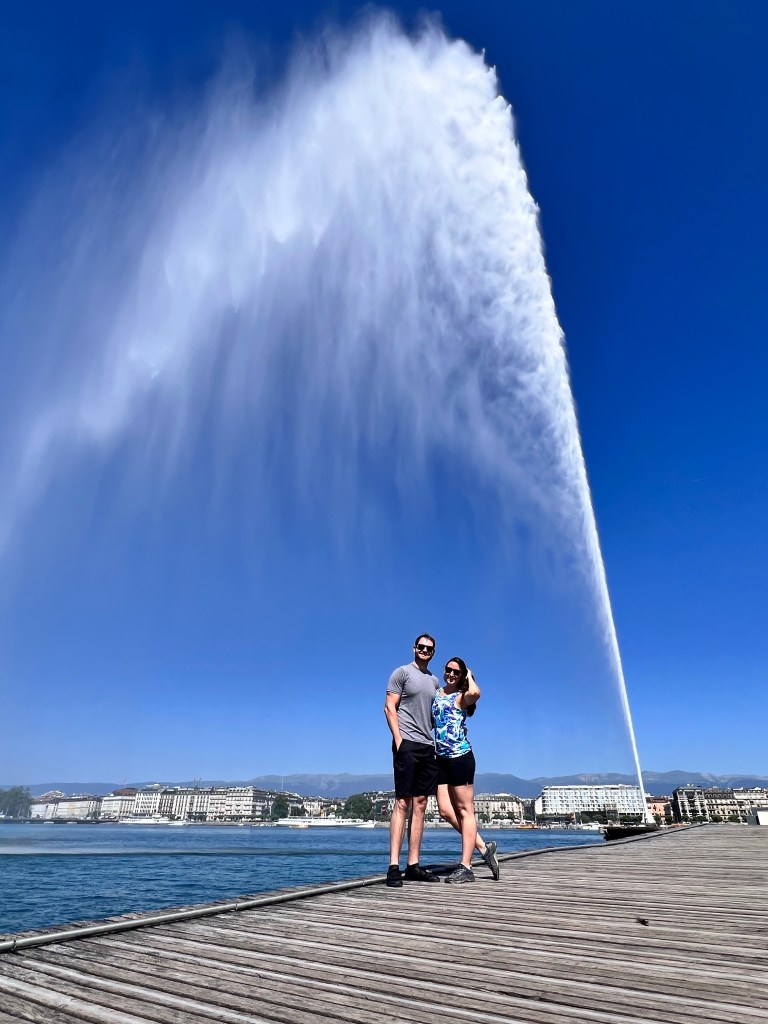
This was our first stop on arrival from the US, so we first had to sleep and recover. We stayed at a fairly crappy Airbnb so I won’t bother recommending it, but fortunately it was just for two nights. We had one full day here to explore, so we walked around and saw the key sights. Geneva was a nice city with a beautiful lakefront.
Geneva highlights:
- Tour de I’lle
- The old town
- St. Pierre Cathedral
- The lakefront
- The Geneva water fountain
- Parc La Grange
- Natural History Museum
- United Nations Building
- Museum of the Red Cross
- Broken Chair
- Botanical Gardens
We also didn’t realize yet on arrival that we would have had access to the boat tour of Lake Geneva and many other museums using the Swiss Travel Pass. But we actually didn’t activate our pass until the day we were leaving and needed to use the train, in order to maximize our 15-day period within our 18-day trip. So, we missed out on some opportunities in Geneva, but we also only had about a day and a half to explore, so that’s okay.

Lausanne
Next we took the train to Lausanne where we stayed at another unremarkable Airbnb for two nights. We explored Lausanne on our first half day and the morning of our last day before checkout. We actually really liked Lausanne. It was a very nice city with a gorgeous lakefront promenade and nice architecture. And not quite as busy as some of the other cities which we appreciate.
Lausanne highlights:
- Olympic Museum
- Olympic Park
- Lake waterfront area (Promenade)
- Esplenade de Montbenon
- Place de la Palud
- Escaliers du Marche
- Lausanne Cathedral
- Chateau St. Marie
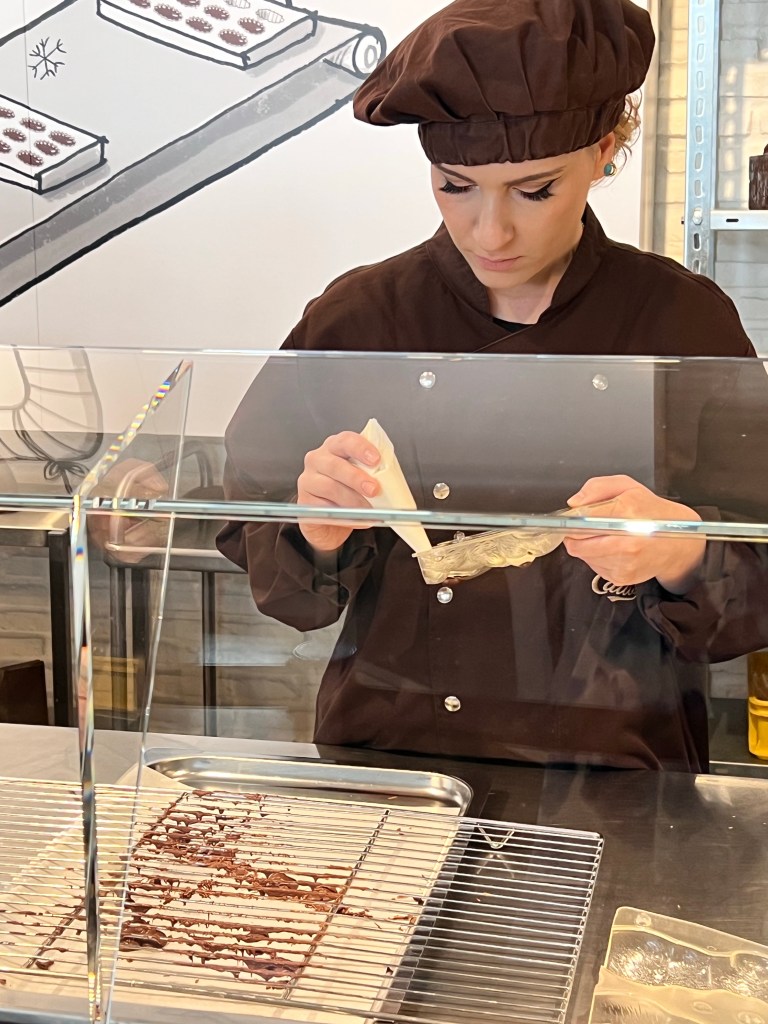
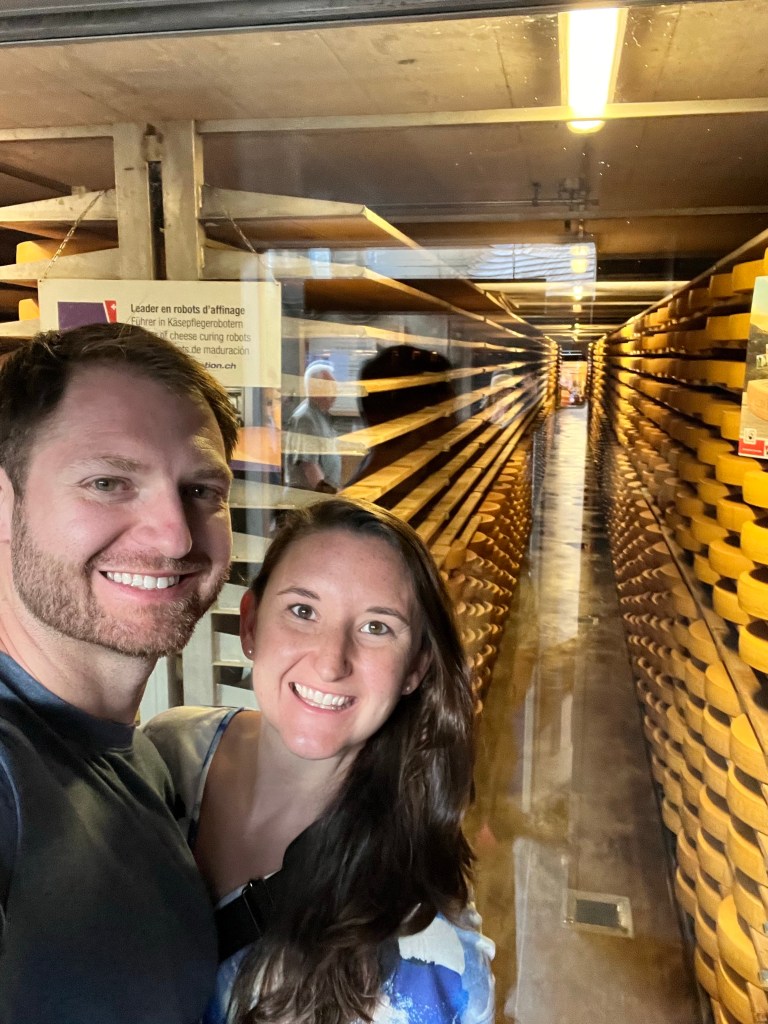
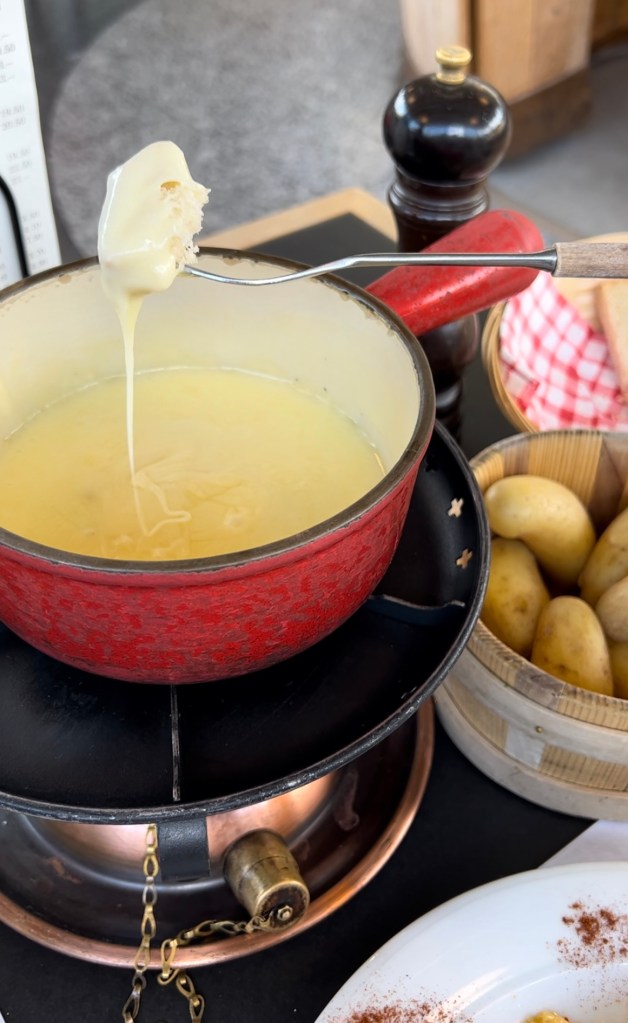
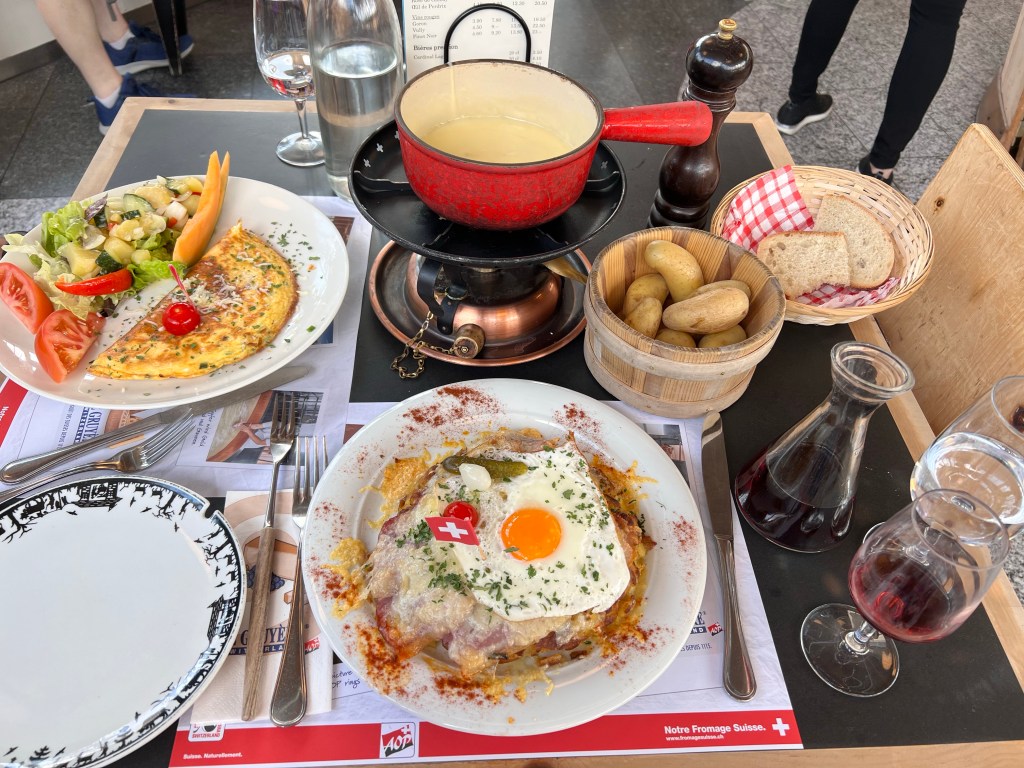
On our one full day staying in the Lausanne area, we took a day trip to Gruyeres and Broc which were beautiful villages in the mountains. Here we went to the Gruyeres Castle, which was awesome and had stunning mountain views. Then we went on a tour of La Maison du Gruyere, the cheese factory. It was neat learning about the local cheese production. Here we also ate at the restaurant including trying the local cheese fondue made with their own Gruyere cheese! Then we took the bus over to Broc to visit the Maison Callier chocolate factory, complete with a lot of delicious chocolate samples! Both factory tours were included with our Swiss Travel Pass and were awesome experiences. We would highly recommend this day trip if you have the opportunity.
After this, we were feeling ambitious and wanted to see the city of Montreux, so we took the train there to visit for a little while before returning to Lausanne. Here we visited the Chillon Castle which is built out over the lake. This was much different than the castle we saw earlier in the day in the mountains, but also very cool! I mean it’s not everyday you get to go to not one, but two castles! Then we finished with a walk along the lakefront promenade before returning to Lausanne for the night. Montreaux seemed a little more glitzy like a resort town, so if you’re feeling fancy this may be another option where you’d choose to stay.





Zermatt
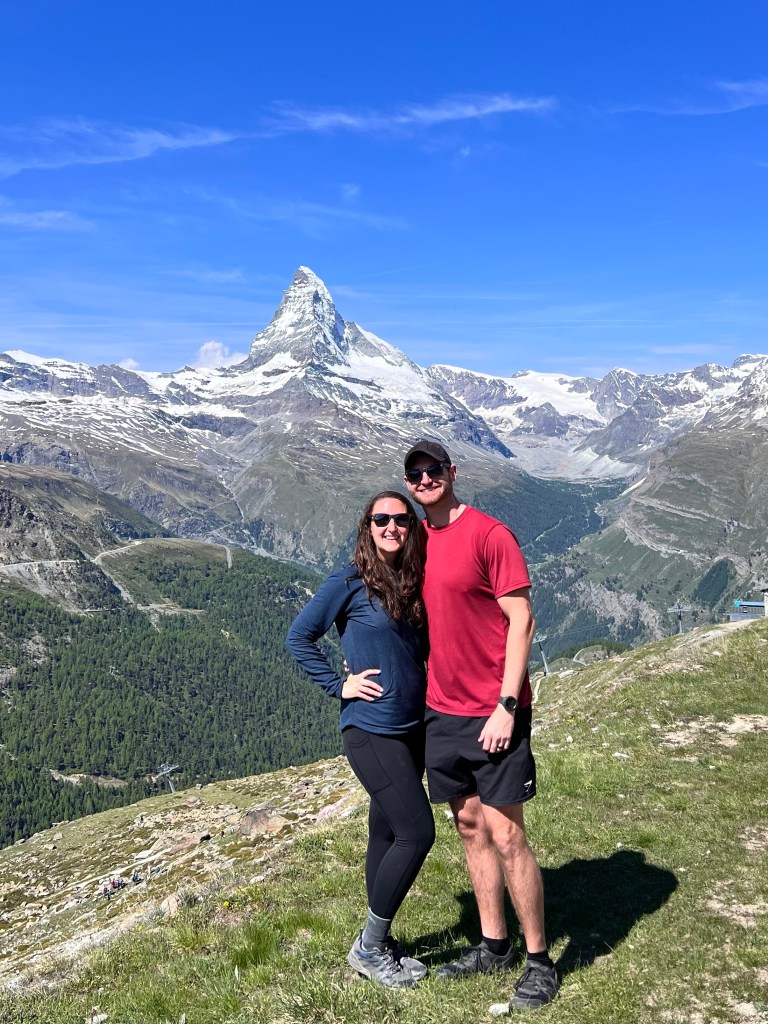
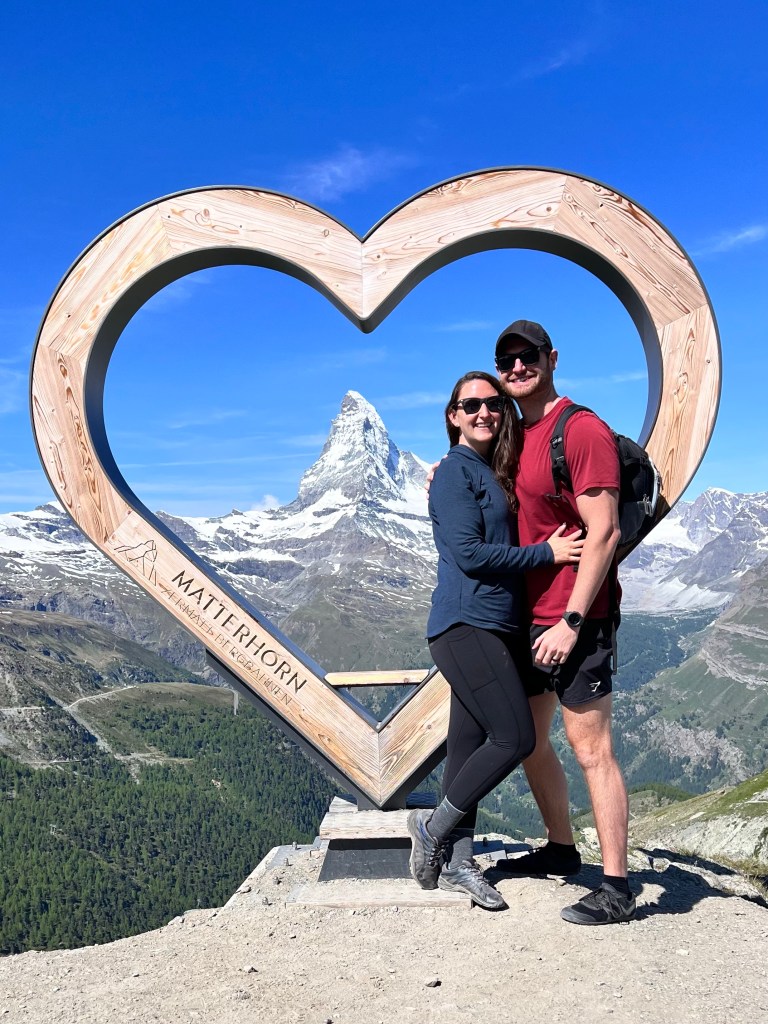
We were already having an amazing time during our first four days in Switzerland, but little did we know we hadn’t even gotten to the best part yet. We took a very scenic train route from Lausanne to Zermatt and got so excited when we started to see the Swiss Alps. We were in complete awe when we arrived in Zermatt and saw the famous Matterhorn!
We loved where we stayed in this cute mountain town. We booked it through Airbnb, but it’s a vacation lodge, and our room had a great view of the village and the Matterhorn! Here is the link to where we stayed on Airbnb. It was fairly affordable compared to the other listings. But keep in mind there are a lot of places in the town where you can see the Matterhorn, so do some searching, and depending what’s available for your trip dates, you may find something comparable or even better.
We hiked three days in a row while we were in Zermatt, and the views of the breathtaking alps were endless! I’ll link to the hikes we did on AllTrails and describe them.
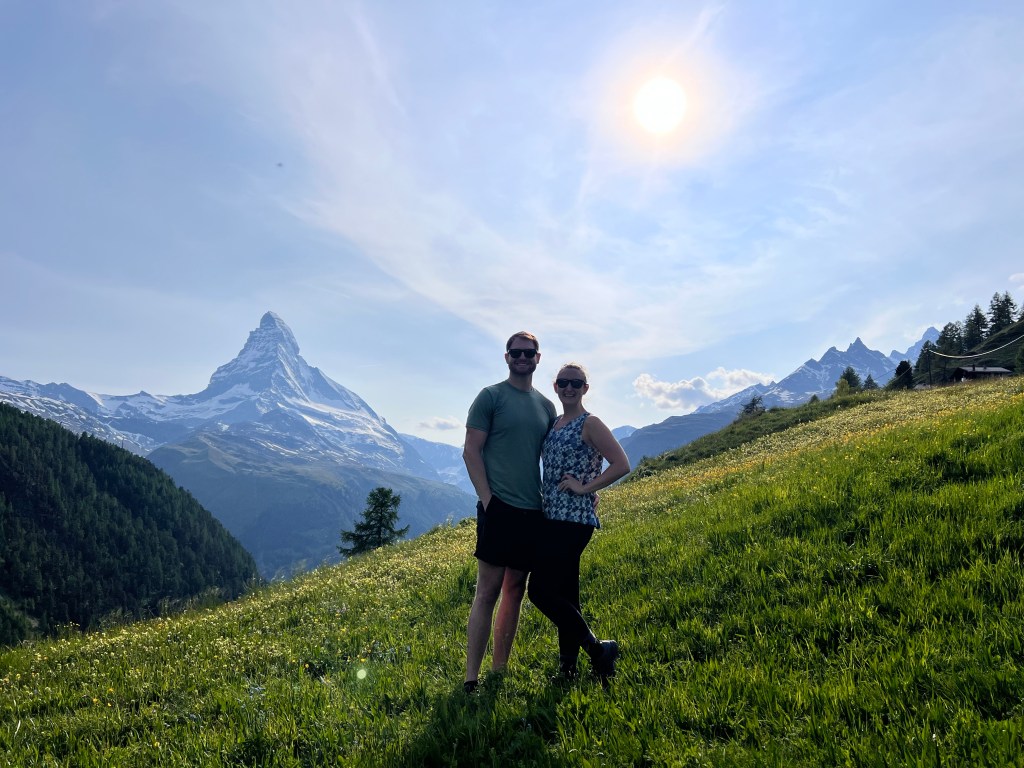
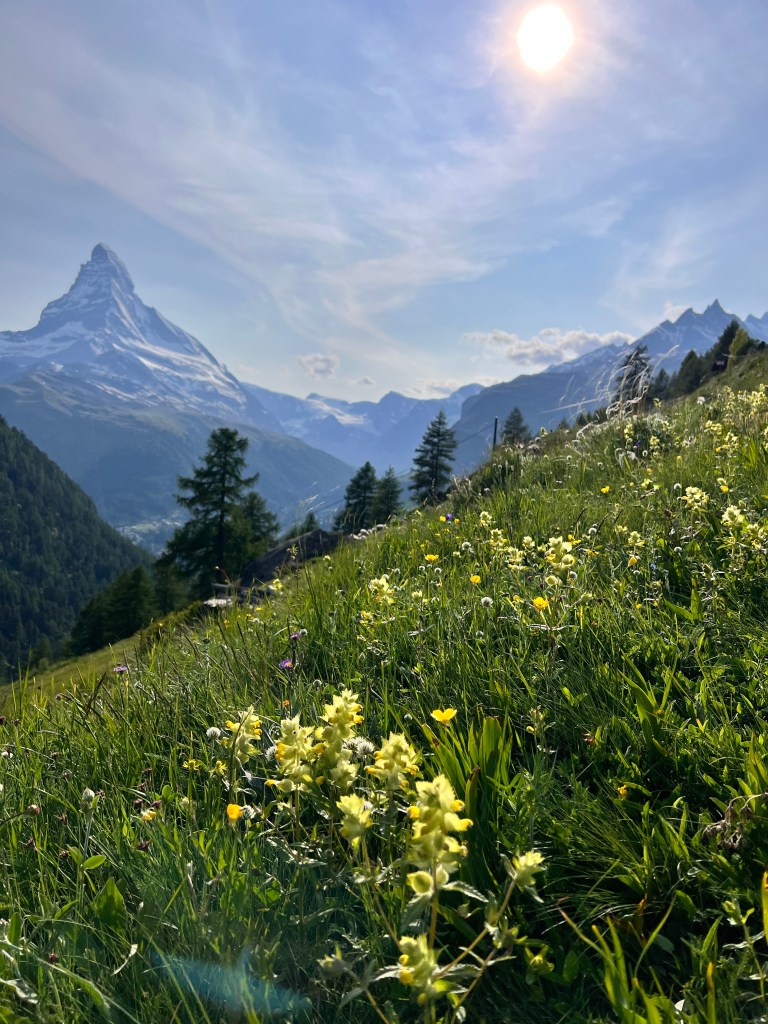
The first day when we got there, we did a short but steep hike in the evening. We ended in a meadow all to ourselves with epic views of the Matterhorn.
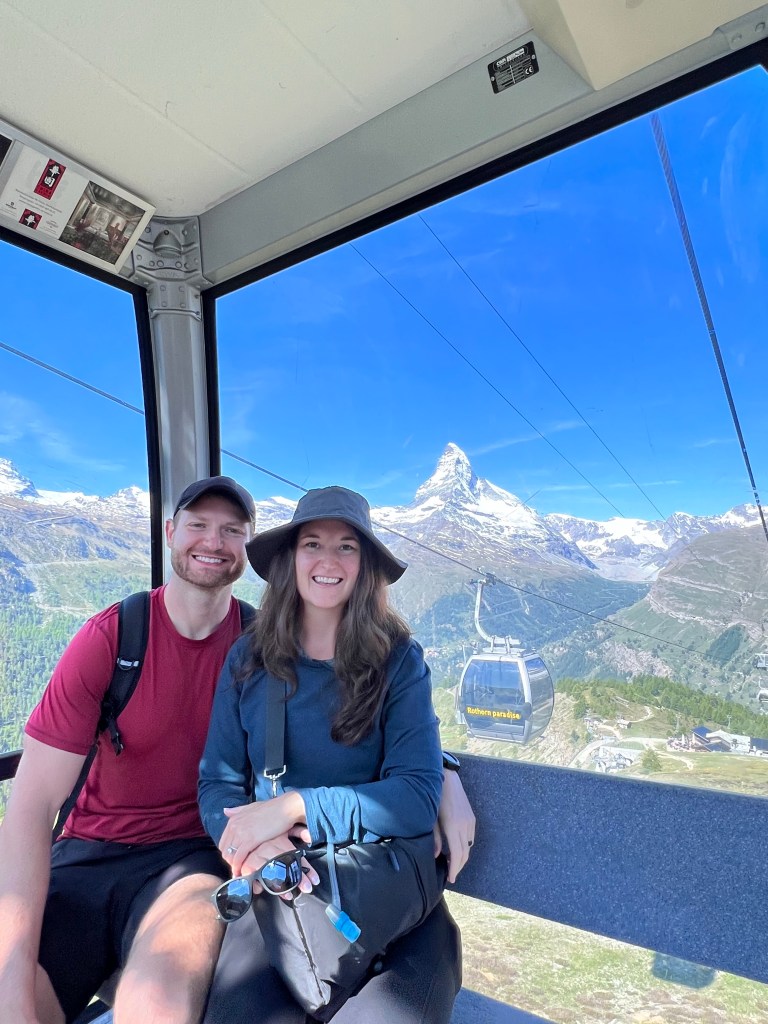
The next day, we took the funicular up the mountain to Sunnegga, then the cable car from there up to Blauherd where the views were already amazing. We found that there are a lot of accessible ways to get great views in Switzerland using the public transport even if you’re not a hiker. From there, we did the popular 5 Lakes Hike. We just did the down portion starting in Blauherd and ending in Sunnegga, where we caught the funicular back down to Zermatt. This was a fairly easy trail for anyone in decent shape especially if you do only the down portion. While it was touristy, we still loved it and were in awe of the views.
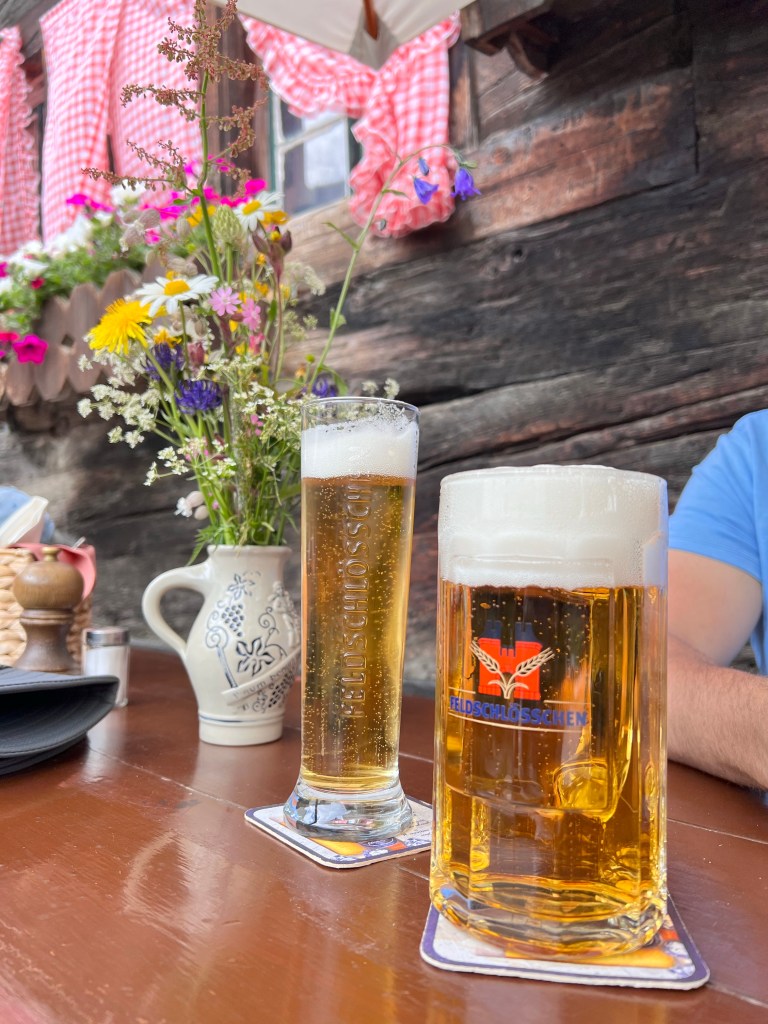
The next day we were somewhat fatigued and sore from two back to back days of hiking, but we couldn’t resist setting out on another trail. We wanted to do this difficult 12-miler but weren’t sure we were up for the whole thing. So we set out on this shorter version that actually uses the beginning of the other trail. Once we got going, we decided to hike a little further than this hike says, along the 12-mile trail, but we didn’t do the whole thing. We turned around at about the 4.5 mile mark, making our hike about 9 miles total out and back. Each day we hiked we just couldn’t believe the views were better and better. We also got to see a herd of cows with the famous large bells along this trail. We stopped at a cute little restaurant in the village of Zmutt on the way back from the hike. It was neat to find restaurants up on the mountains, mainly accessible by foot (or in the winter, by skis).
Besides hiking, we enjoyed walking around the cute village of Zermatt, and we especially enjoyed relaxing on our balcony in the mornings and evenings with views of the Matterhorn. We also went to the Matterhorn Museum and learned more about the Matterhorn, Swiss Alps, Zermatt, alpine mountaineering and the history of tourism in that area.






Murren
Zermatt was amazing, but we knew it was about to get even better when we headed deeper into the Bernese Alps toward the Lauterbrunnen Valley, and we were correct! The train ride to get there was beautiful, passing the stunning lakes in the Interlaken area, then getting into the valley surrounded by huge mountains.
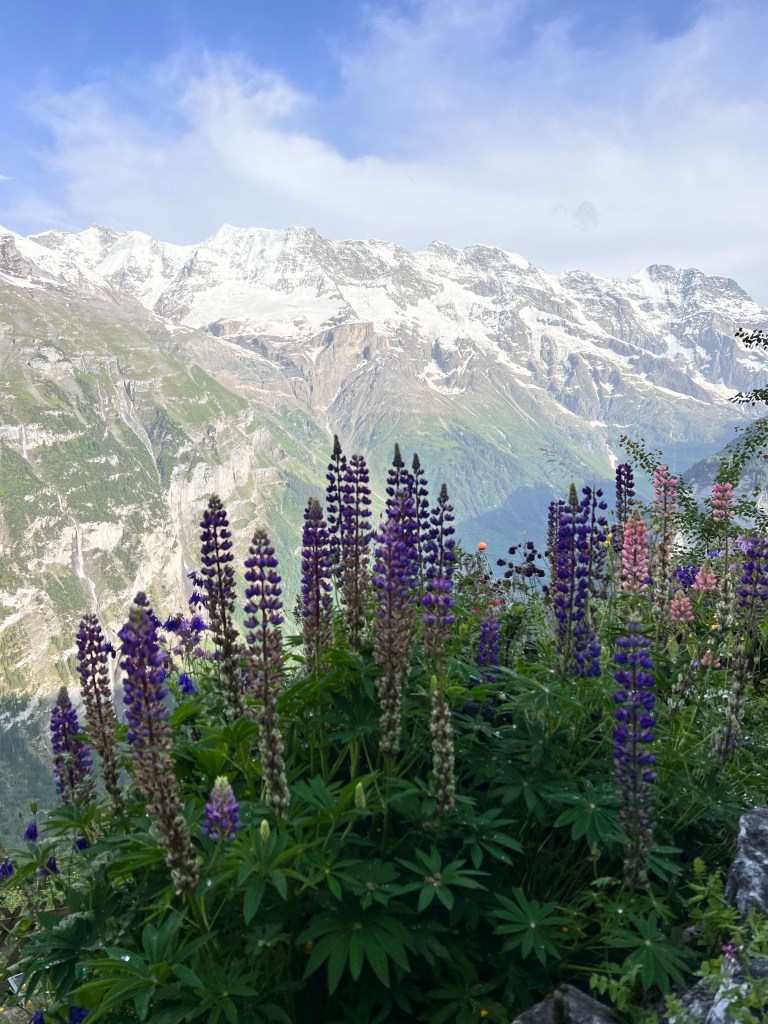
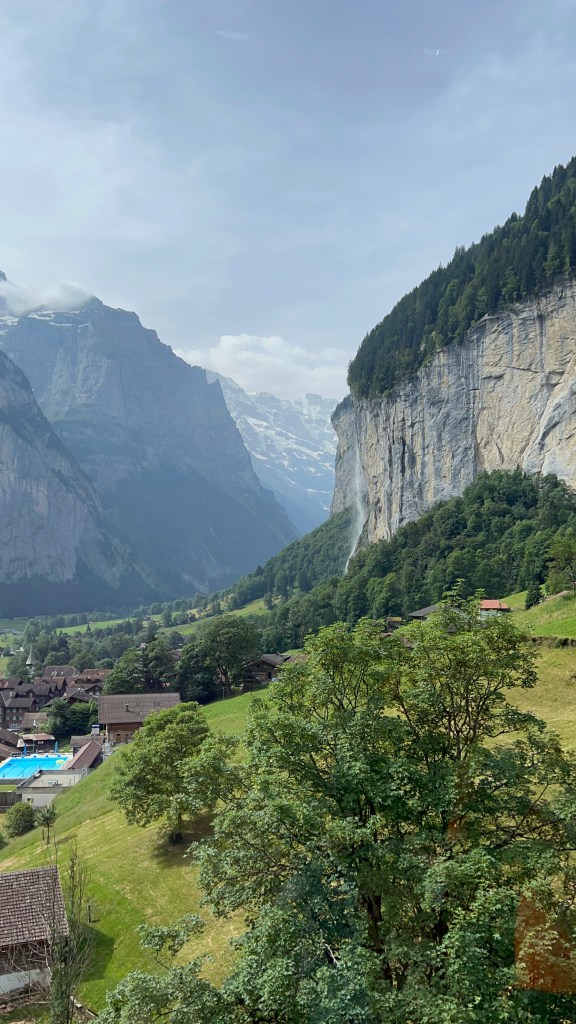
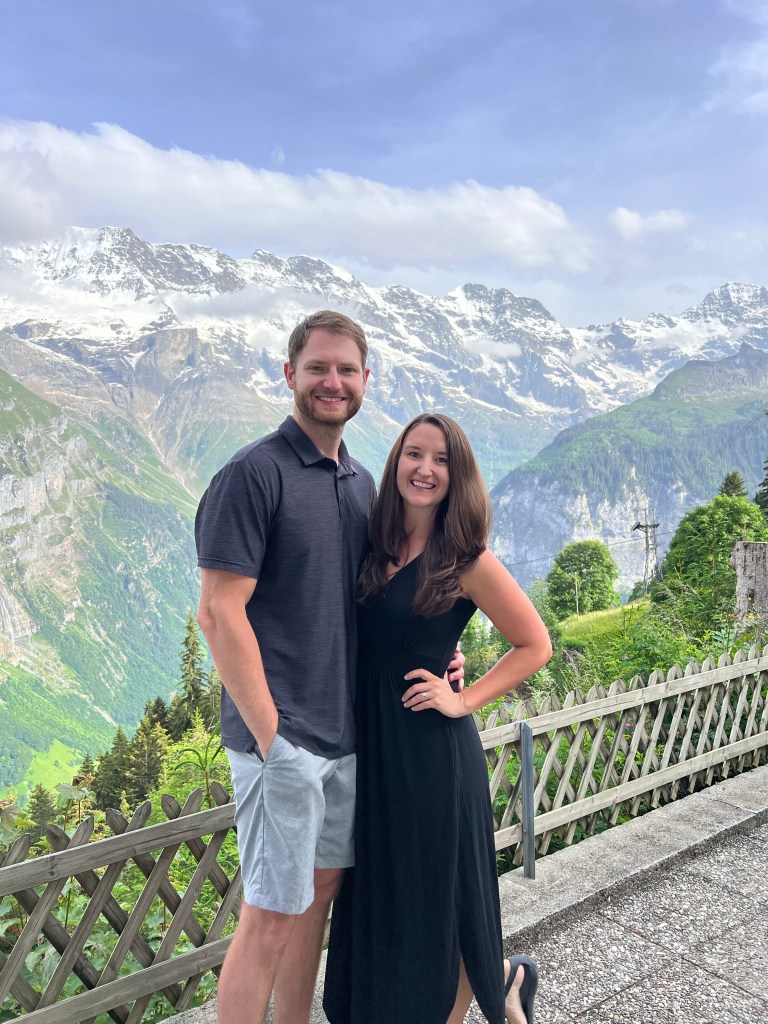
We decided to stay in Murren instead of nearby options like Interlaken or Laterbrunnen because we read how beautiful it was, and we also found an affordable lodging option. It’s a bit harder to get to and from Murren because it’s very deep in the mountains, but it was totally worth it. Murren was the most stunning place we’ve ever seen. The views from our place there were unbelievable, like a fairytale, with massive, glacier topped mountains right in your face, covered in huge waterfalls streaming down. We read that Murren is what Disney based the Magic Kingdom off of and what Tolkien based the Elven Kingdom off of for the Lord of the Rings. Once we saw it for ourselves, this made perfect sense. It truly was like living in a fairytale!
We would 100% go back to where we stayed in Murren and stay for a month or more. In our minds, there’s no doubt that you need to book the exact place where we stayed. Of course, you’ll still have an amazing time if you stay in one of the nearby areas, like Interlaken, Lauterbrunnen, or Wengen. But where we stayed, called Chalet Bobs in Murren, really just can’t be beat. Here’s the link to their website to check it out for yourself.
To get there, we took a train to Interlaken, switched to a train to Lauterbrunnen, took the cable car up to Grutschalp, then the train to Murren, followed by a little bit of a walk. And yes then you have to do the reverse to get out of there, or at least part of it to get to day trips. But if it was easy to get to, you wouldn’t have the secluded, impeccable views we had! Luckily our Swiss Travel Pass covered this whole route.
When we arrived at Chalet Bob’s in Murren, we could not believe our eyes. The photos seemed too good to be true, but in reality they didn’t even do the view justice. We really didn’t even want to leave our apartment. We just wanted to stay there the whole time and enjoy the cozy chalet and incredible views. But, there was much to experience there, so we had to get out and take advantage of each day!
Our first day, we had to go to the sports center to pay the city tourist tax, and there you can get access to the pool and hot tub in exchange for the tax. This was a nice activity on our first evening to rest our achy legs from so much hiking. We did use the gym there to do an upper body workout, which was our first gym workout of the trip. The gym was terrible by the way so we wouldn’t really recommend paying the extra fee to use it. But the hot tub with a view made up for it.
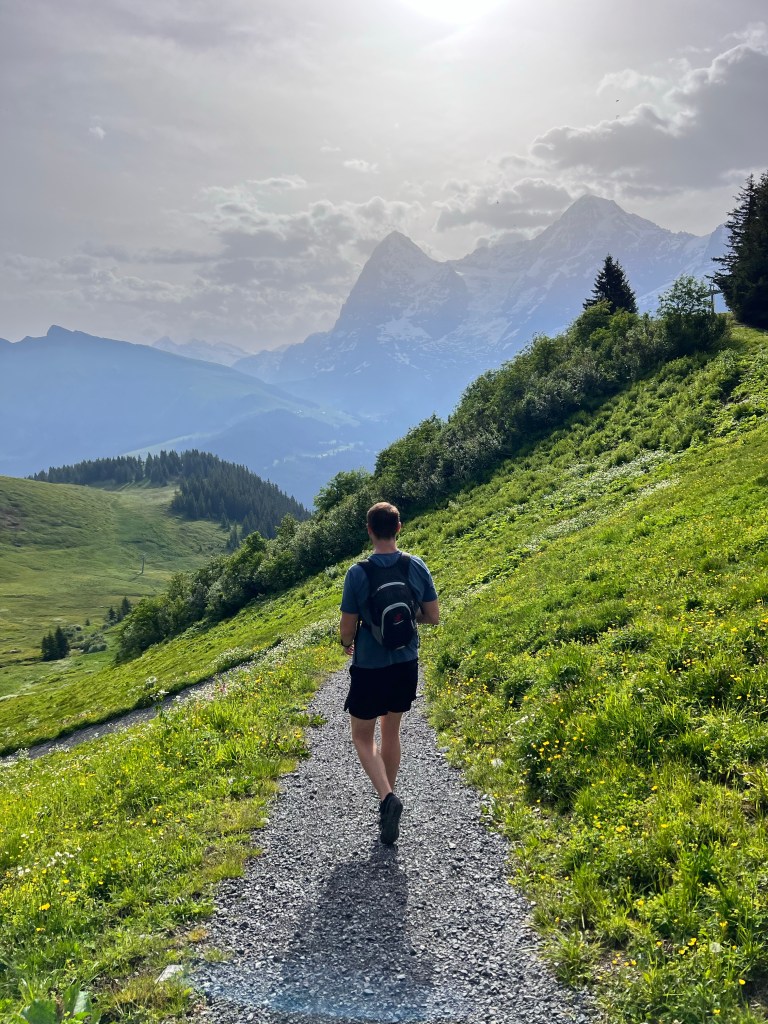
Each day we were in this area there were rainstorms in the afternoon, so we took advantage of the mornings to go out and explore. We hiked every single day we were there and went on some of the best day trips! I’ll link to the hikes we did on AllTrails and also describe what we did each day.
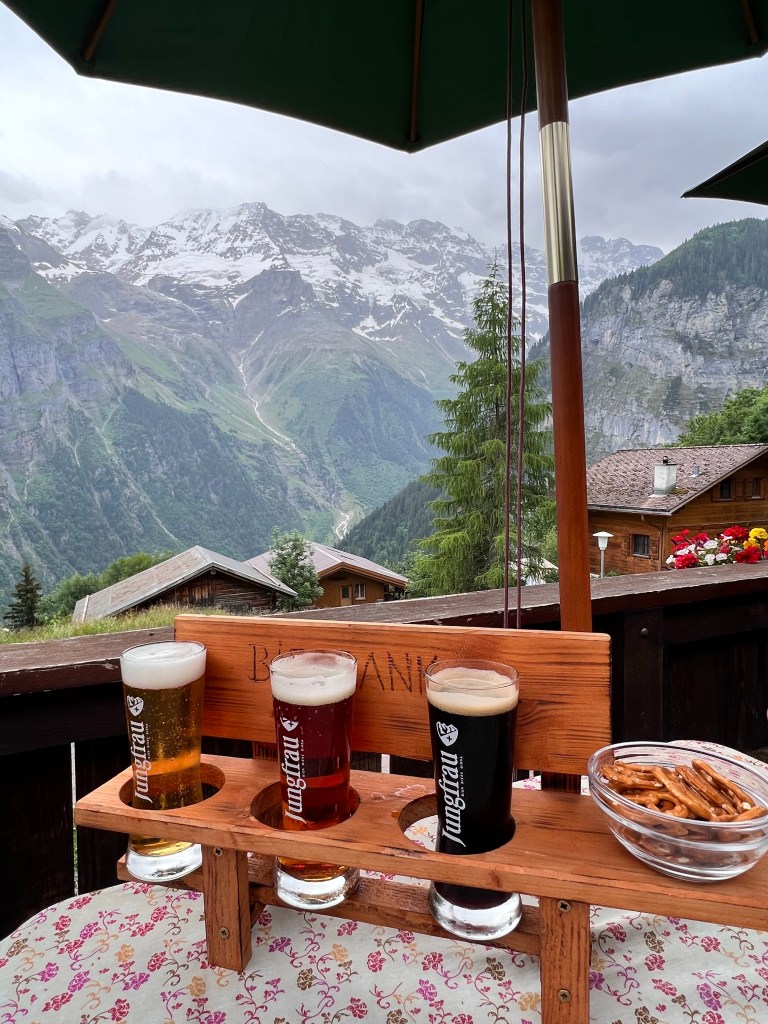
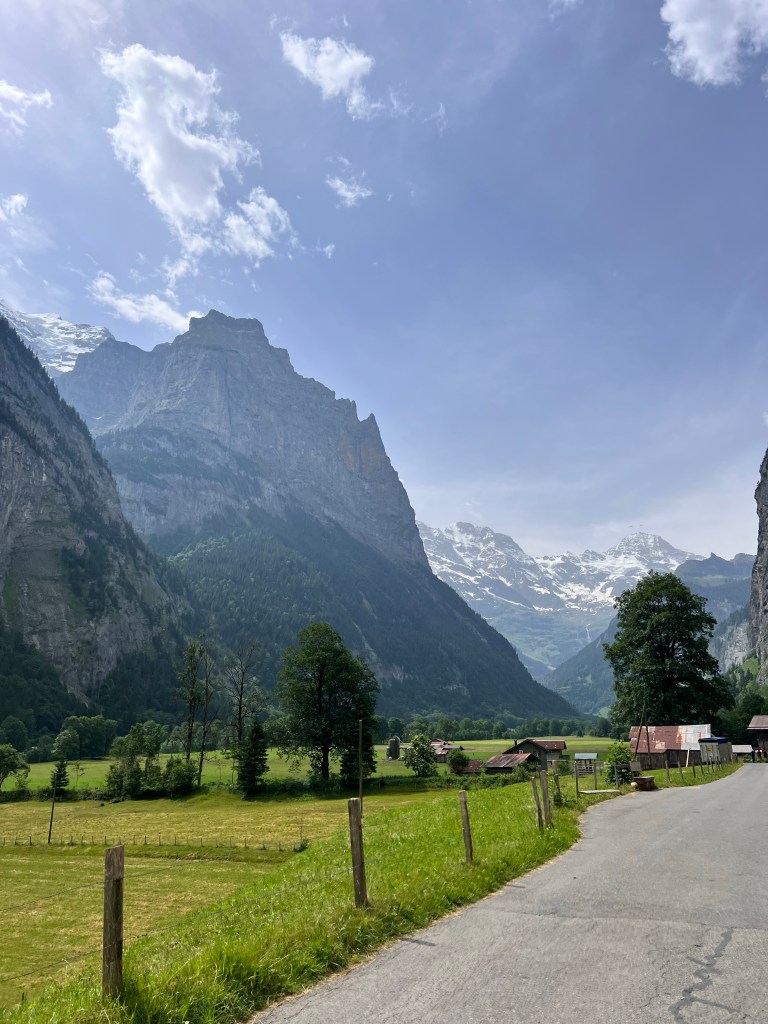
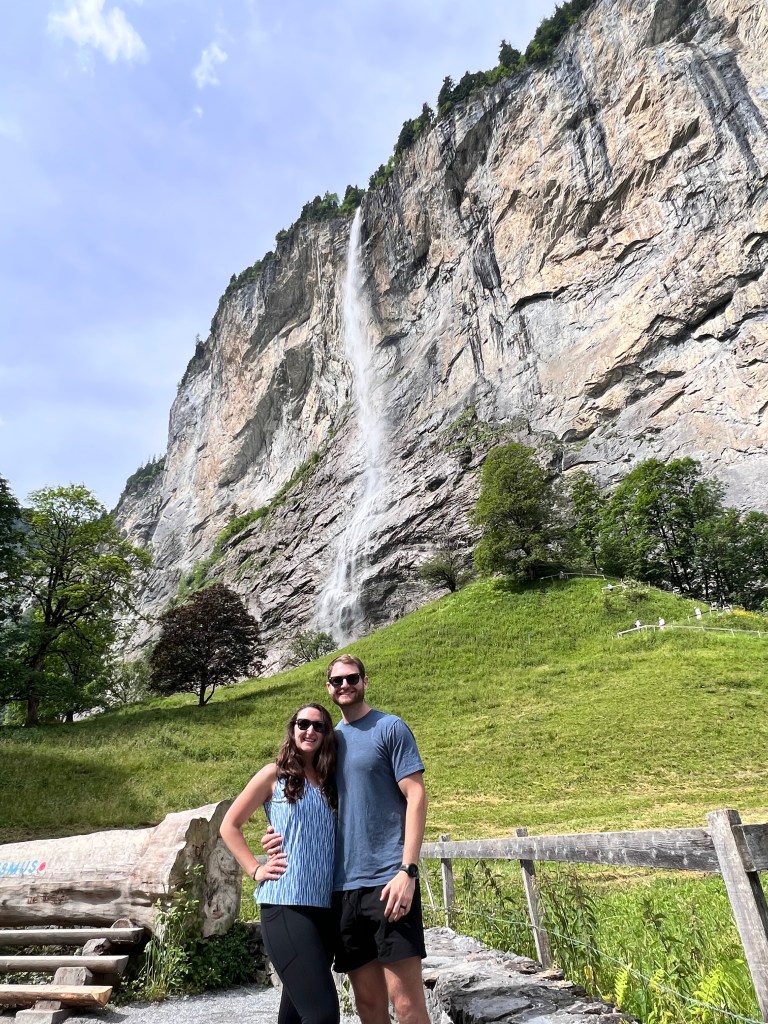
The first full day, we set out to do a version of this hike. Since we were starting in Murren which is up on the mountain, the route would be a little different than it states on AllTrails where it starts from Lauterbrunnen. We decided to hike the part from Murren to the cable car station in Grutschalp, then take the cable car down to Lauterbrunnen to avoid the steep downhill into the valley, walk across the valley to Stetchelberg, then hike the steep mountain back up to Gimmewald then back to Murren. This was an amazing day with the most stunning views. We loved the mountains and meadows from Murren to Gruschalp. Then the Lauterbrunnen Valley with its many waterfalls (including the famous Staubbach Waterfall), cute towns, and gorgeous towering mountains above. Then the view once we got up to Gimmewald and stopped for a late lunch and in-house brewed beer at Pension Gimmewald. It was all just the best!
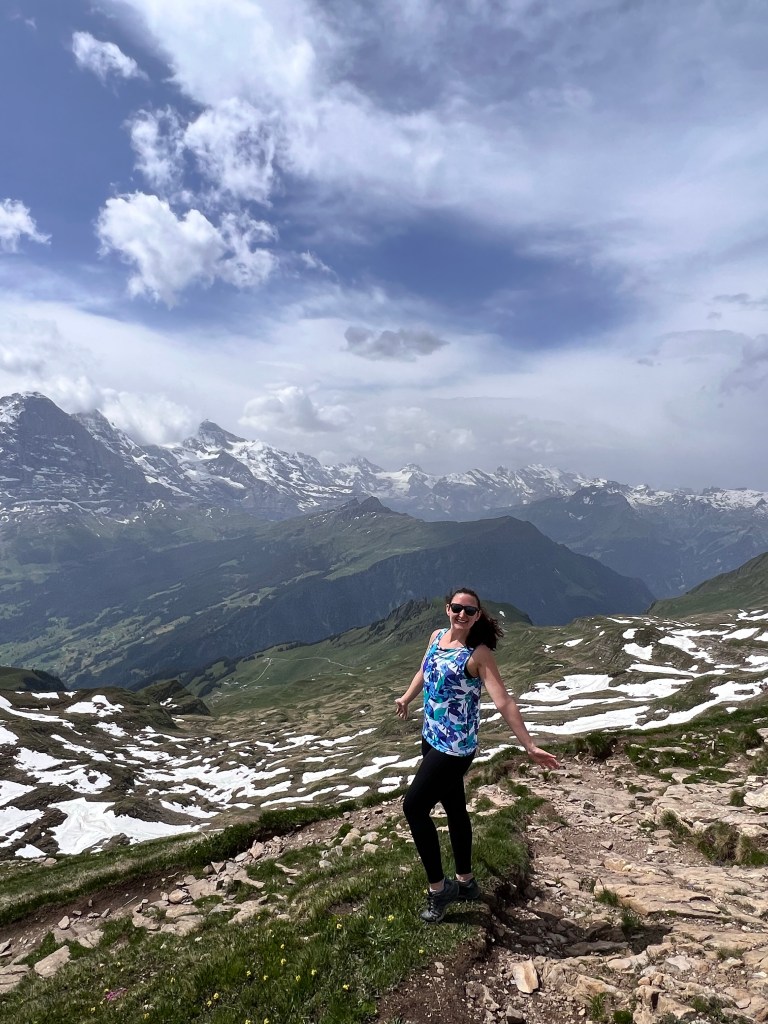
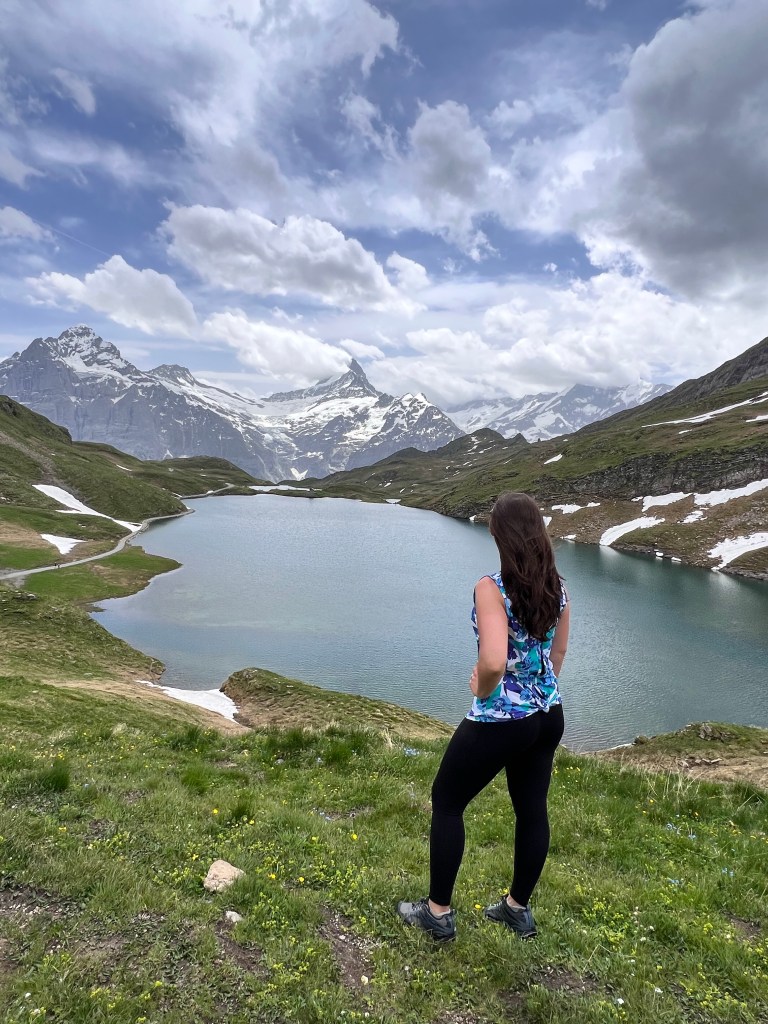
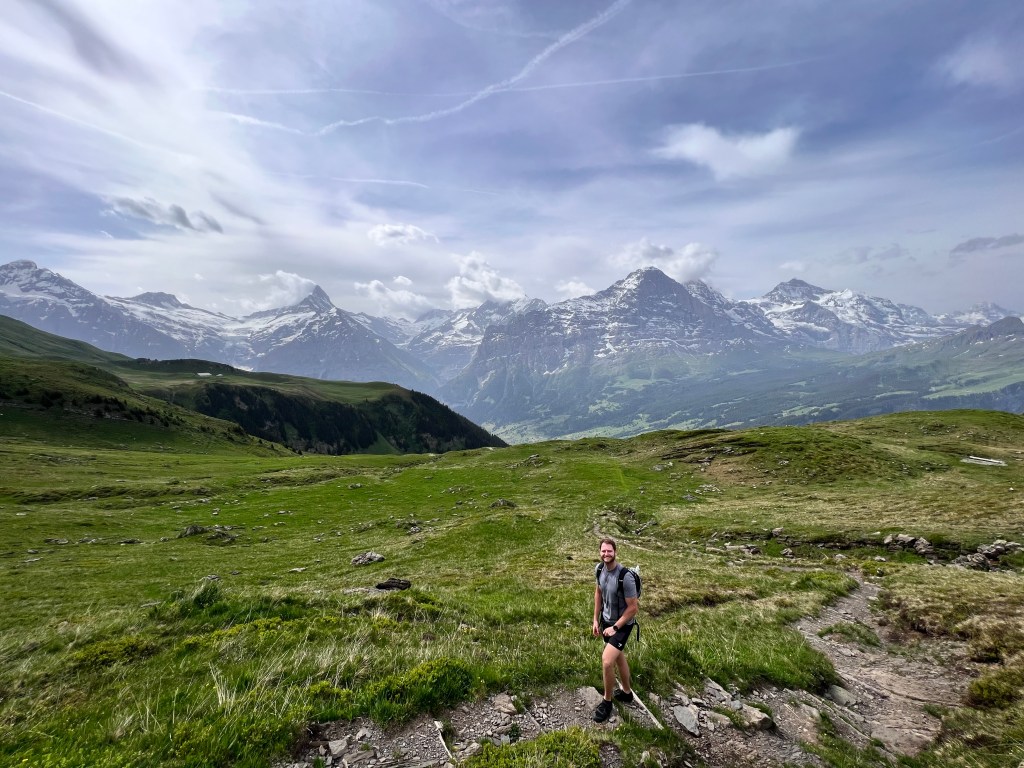
The next day, we ventured out toward Grindlewald, to start a hike in the small village of Bussalp. This was about a two hour journey from Murren on various forms of public transport. We figured out that we did this hike the hard way compared to what a lot of other people did. We hiked from Bussalp, up to Faulhorn, then down to the Bachalpsee lake, then to First. Many people instead start in First and just go to the lake, or maybe up to Faulhorn, and do it as an out-and-back, while we did it as a point to point with different start and end points. It was a good challenge though, and the views of course were spectacular. We saw so many mountains, valleys, and lakes. Then we ended in First and did the First Cliff Walk. From there we took the cable car from First back down to Grindlewald and ate lunch. This whole area was stunning and it was an amazing day. Our Swiss Travel Pass didn’t cover the bus from Grindlewald to Bussalp or the Cable Car from First to Grindlewald, but there was a discount.
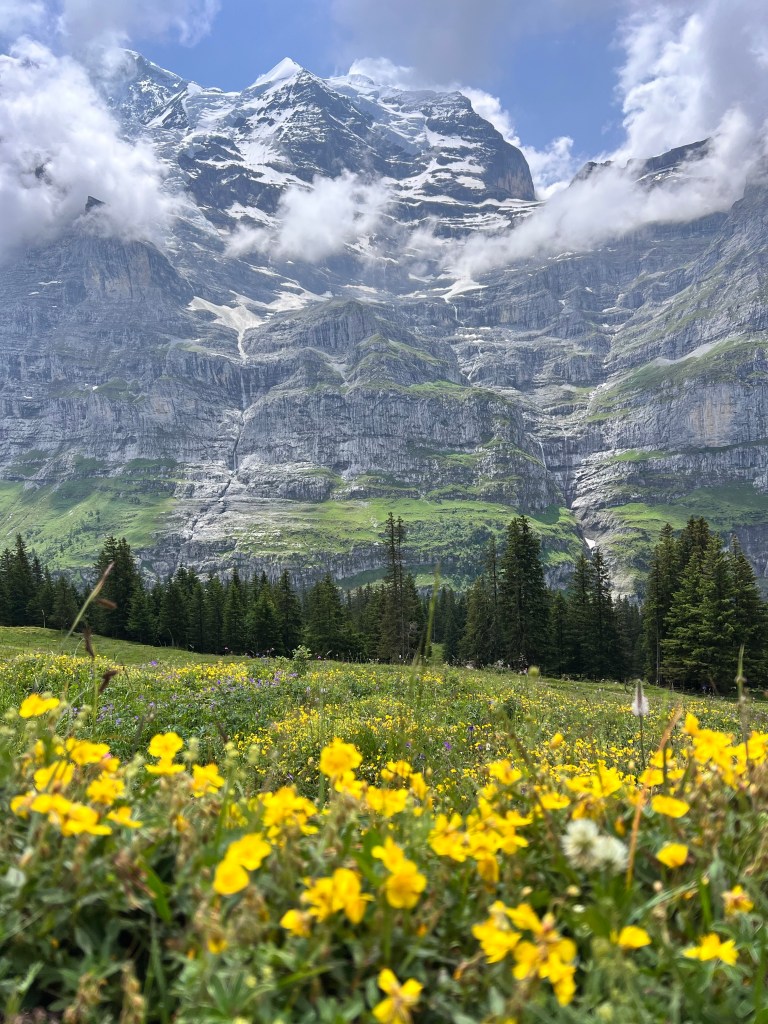
On our last full day in this area, we went across the valley to the town of Wengen to start a hike up to Kleine Scheidegg. Just when we thought that views couldn’t get any better, they did. We saw some of the most epic mountain and waterfall views about halfway up on this hike in a cow field. Luckily we got a clear view then, because when we reached the top, the clouds had moved in and covered the mountains. Otherwise I think there would usually be a really nice view from Kleine Scheidegg. We then took the train back down to Wengen (this was not included with our pass, which we didn’t know otherwise we probably just would’ve hiked back down because it wasn’t too challenging). You could also do this in reverse: train up to Klein Scheidegg and hike down to Wengen. Either way, we highly recommend this beautiful day trip. Afterwards, we ate lunch and strolled around the cute village of Wengen for a bit before returning back for our final night in Murren.
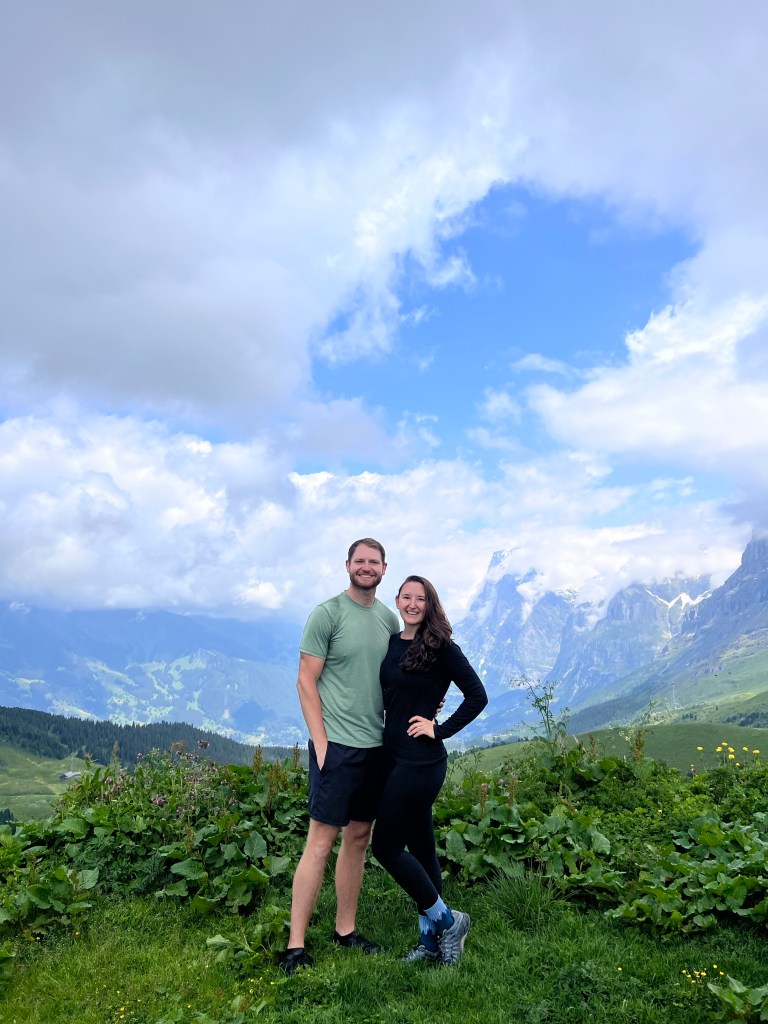
We were sad to say goodbye when we had to leave Murren, and on our last morning we were gifted with glorious weather, blue skies and clear views of all the mountains. We will certainly be back.
During our seven day stretch in the mountains, we hiked about 46 miles with about 15,000ft of total elevation gain. And this is just the hikes we did, not including extra walking we did in the cities and villages. This is the most hiking in a short period we’ve ever done before. Needless to say, we were exhausted every evening, so we were going to bed early and then waking up early to do it all again. This was sustainable for about a week, but after we left the mountains we were ready for some down time!















Lucerne
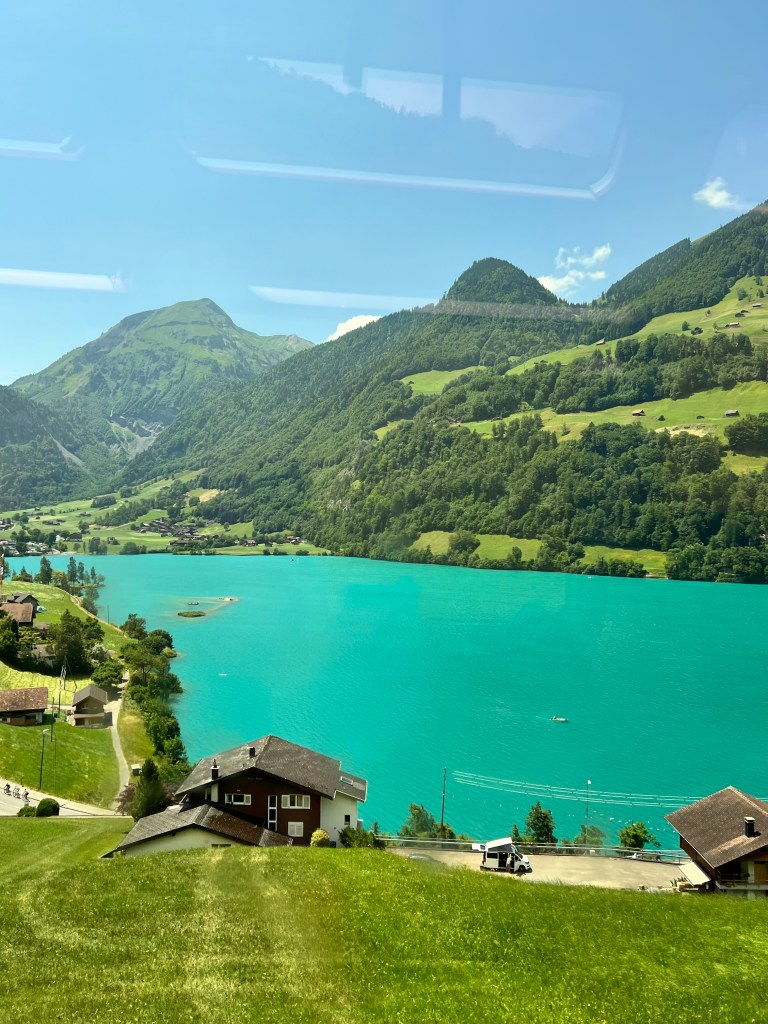
We took the scenic train route back between the Lauterbrunnen Valley and Interlaken, and then between Interlaken and Lucerne. There were a lot of gorgeous lakes between Interlaken and Lucerne. It looked like there would’ve been plenty to see and do around Interlaken if we’d had more time. Possibly the next time we visit!
After we left the mountain region, our next two stops (Lucerne and Zurich) felt somewhat underwhelming. We were also just tired and didn’t have as much energy to explore, so we really didn’t do a whole lot.
Lucerne is a nice city with a pretty lake, surrounded by mountains, with nice architecture. Had we gone there in isolation, I’m sure it would’ve seemed stunning, but again it just somehow felt underwhelming after where we’d just come from.
We did enjoy walking around the old town and seeing the beautiful buildings. We also took a boat ride across the lake, then the train up to Mt. Rigi, all for free with our travel pass. We just did this mountain the touristy way, grabbing a beer and brat at the top, then taking the train back down, rather than hiking it.
In Lucerne there weren’t any good Airbnb options, and everything was pretty expensive, so we stayed at the Ibis Budget Hotel which was exactly as described—a budget hotel. It was more or less like a hostel with private rooms. The only perk to this place was the AC, which we appreciated since it was pretty hot in Lucerne. AC isn’t common in homes in Switzerland, so none of our Airbnbs had it.
Lucerne highlights:
- Old Town
- Gletschergarten Museum
- Boat trip across the lake
- Mt. Rigi mountaintop
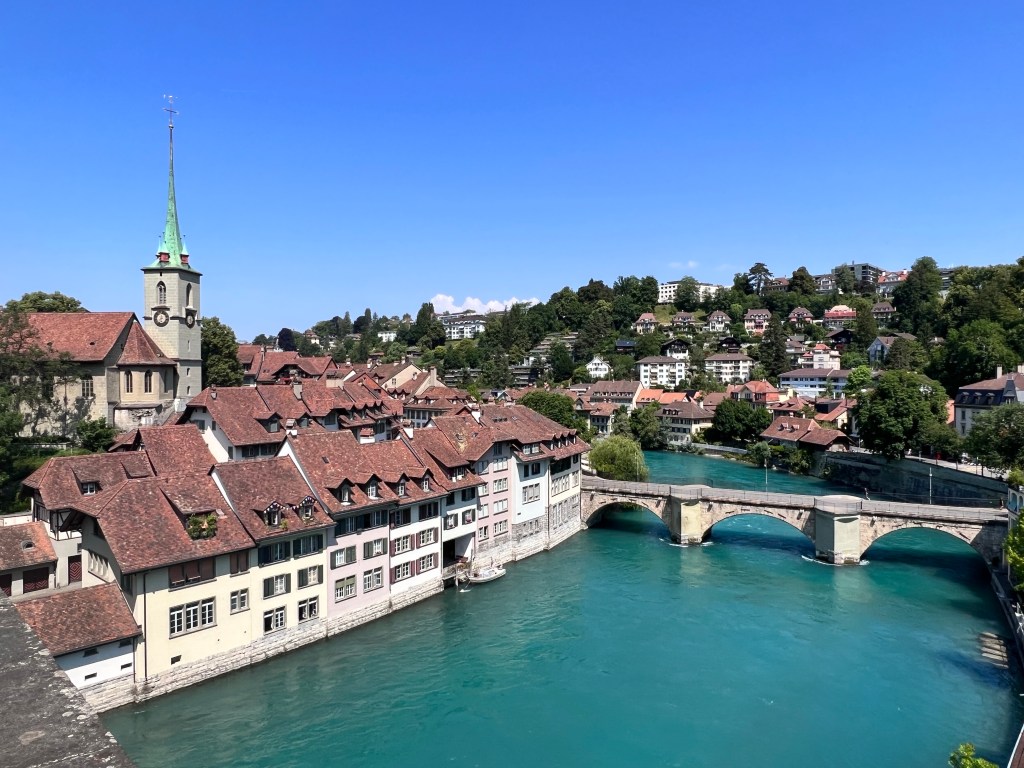
While in Lucerne, we also took a day trip to the capital of Switzerland, Bern, for the day via the train. Here we did a free walking tour and learned more about the history of Switzerland and the capital. Bern was another beautiful city, and quite small and quiet for a capital.




Zurich:
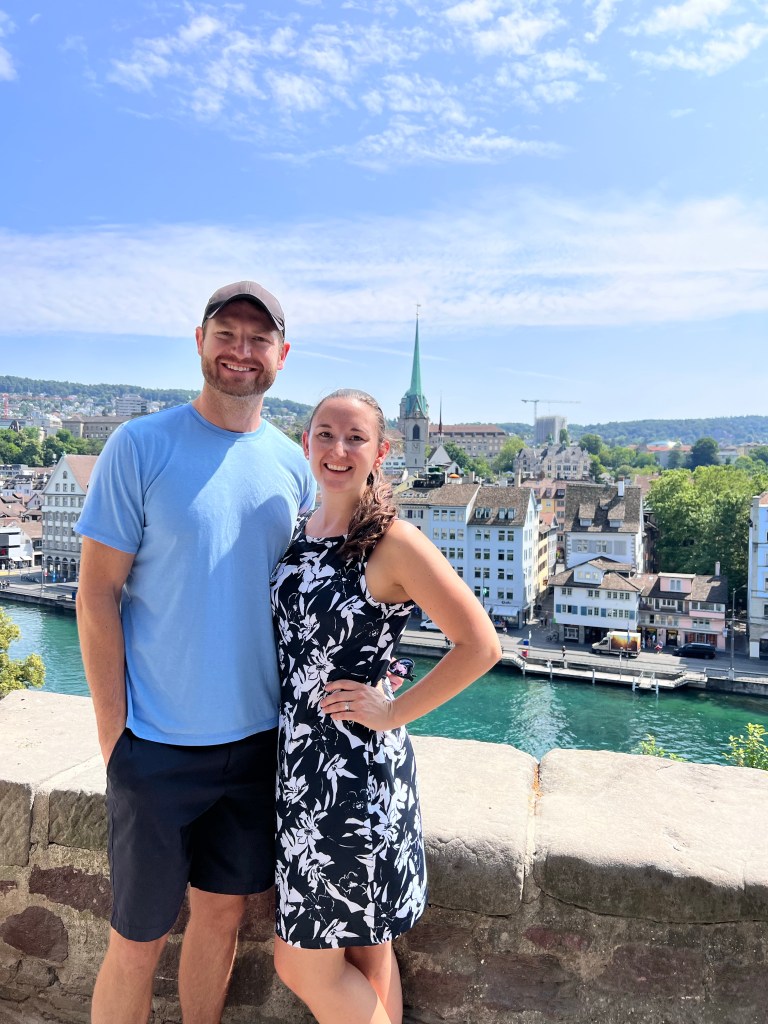
Our final stop was Zurich, which again was a nice city, but we just didn’t appreciate it as much after having been to the amazing mountain locations. Here we stayed in an average Airbnb. We used the trams to get around the city, plus walking quite a bit.
Zurich highlights:
- Switzerland National Museum
- Free walking tour
- Boat tour across the lake
- Lindenhof viewpoint
- Swiss Finance Museum
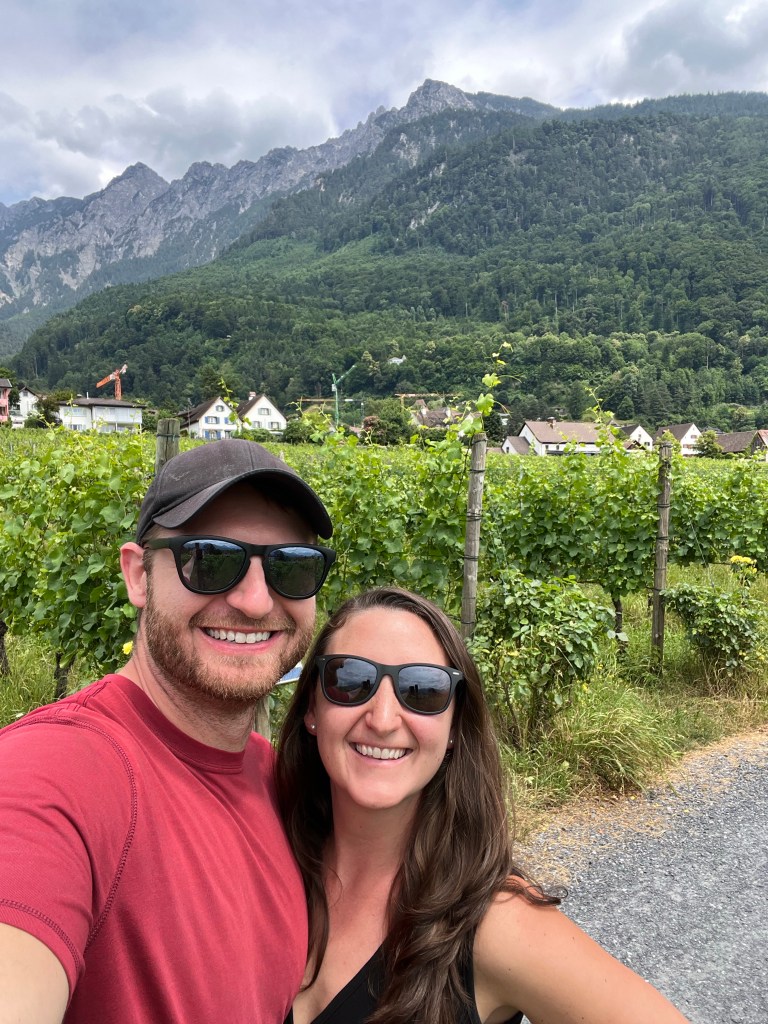
While in Zurich, we also took a day trip via bus to the nearby small nation of Liechtenstein, adding another country to our list. We were surprised to learn how interconnected Switzerland and Liechtenstein are. In some ways, Liechtenstein almost seemed just like another one of Switzerland’s cantons (states). We visited their national museum, cathedral, and a winery. The winery was a highlight for me. I enjoyed the tasting we did there and liked all the wines. The vineyard there dates back to before Liechtenstein was a country, in the Roman times. When the Prince who established Liechtenstein bought the land, the vineyard was already there. The winery is called “Prince of Liechtenstein Wine Cellars.” The vineyard is very beautiful and scenic, located walking distance from the city yet nestled in the mountains.


Summary
As you can see, our 2.5 weeks in Switzerland were action-packed! We visited more than a dozen cities and towns/villages, and even squeezed in a day trip to another country!
The highlight for us was our time in the mountains, between Zermatt and the Lauterbrunnen Valley/Bernese Alps region. We especially loved our stay at Chalet Bob’s in Murren. This is one of the absolute most breathtaking places we’ve ever seen in our lives!
We hope you also get the opportunity to visit Switzerland and enjoy it as much as we did! Hopefully some of our tips and experiences will help you with planning your own trip. We personally look forward to returning in the future and experiencing even more!
Have you been to Switzerland before? What were some of your favorite parts? Any recommendations for our next trip there?
 Fifth Wheel Physical Therapist
Thoughts on staying in Wengen instead of Mürren? Chalet Böbs has opening in July when we are headed to BO but some say Wengen has better access to hiking? But all the blogs I’ve read seem to agree Murren is adorable and charming and you can’t go wrong with either?
LikeLike
I agree that you can’t go wrong with either! We felt like the views everyday from Chalet Bobs were just unbeatable. But it is a little harder to get to/from for day trips. Wengen is probably slightly more accessible and also very beautiful. I think Murren being a little more secluded is what makes it so magical. So it’s a tough choice but depends what’s important to you. We went hiking every single day while staying in Murren but some of the days required a little bit longer transportation. If we get to go back we would still choose Chalet Bobs for the view every single day!
LikeLike
How much approximately would those 2 1/2 weeks have cost you both?
LikeLiked by 1 person
Switzerland is one of the most expensive places we’ve traveled to. For the two of us, it cost around $6,000 in total and that doesn’t include the cost of airfare which we used points for. It was an amazing place to visit and we’d spend the money again in a heart beat to go back.
LikeLike